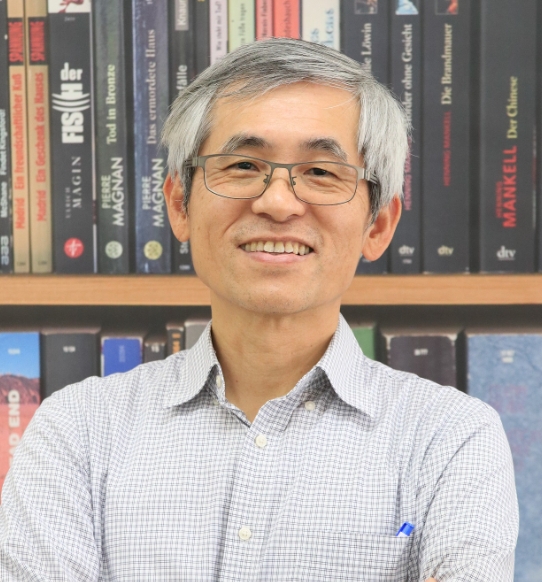
Prof. Shyi-Ming Chen, IEEE Fellow, IFSA Fellow, IET Fellow, AAIS Fellow, IETI Distinguished Fellow
Asia University, Taiwan
Biography: Shyi-Ming Chen is a Chair Professor in the Department of Computer Science and Information Engineering, Asia University, Taichung, Taiwan. He received the Ph.D. degree in Electrical Engineering from National Taiwan University, Taipei, Taiwan, in June 1991. He is an IEEE Fellow, an IET Fellow, an IFSA Fellow, an AAIS Fellow, an IETI Distinguished Fellow, a Member of the National Academy of Artificial Intelligence (NAAI), a Fellow of the Pakistan Academy of Engineering (PAE), a Member of the European Academy of Engineering (UAE), and a Member of Austrian Academy of Engineering (AAE). He was a Chair Professor in the Department of Computer Science and Information Engineering, National Taiwan University of Science and Technology, Taipei, Taiwan. He was the Dean of the College of Electrical Engineering and Computer Science, Jinwen University of Science and Technology, New Taipei City, Taiwan. He was the Vice President of the National Taichung University of Education, Taichung, Taiwan. He was the President of the Taiwanese Association for Artificial Intelligence (TAAI). He was the President of the Taiwanese Association for Consumer Electronics (TACE). He has published more than 600 papers in referred journals, conference proceedings and book chapters. His research interests include Fuzzy Systems, Intelligent Systems, Fuzzy Decision Making, Computational Intelligence, Knowledge-Based Systems, Machine Learning, Deep Learning, Data Mining, Big Data Analysis, Genetic Algorithms, and Particle Swam Optimization Techniques.
He is an Associate Editor of IEEE Transactions on Fuzzy Systems, an Associate Editor of IEEE Transactions on Cybernetics (2019-2024), an Associate Editor of the IEEE Transactions on Systems, Man, and Cybernetics: Systems, an Associate Editor of IEEE Transactions on Artificial Intelligence, an Associate Editor of Knowledge-Based Systems, an Associate Editor of Expert Systems with Applications, an Associate Editor of Information Fusion, an Associate Editor of International Journal on Artificial Intelligence Tools, an Associate Editor of International Journal of Pattern Recognition and Artificial Intelligence, an Associate Editor of International Journal of Fuzzy Systems (2003-2024), an Associate Editor of Journal of Information Science and Engineering, an Associate Editor of Fuzzy Optimization and Decision Making (2016-2024), an Associate Editor of Knowledge and Information Systems (2016-2025), an Editor of International Journal of Intelligent Systems, an Editor of Engineering Applications of Artificial Intelligence (2022-2025), an Editor of Applied Computational Intelligence and Soft Computing, and an Associate Editor of International Journal of Computational Intelligence and Applications.
 Shyi-Ming Chen.jpg)